As they say, the first time you go through thermodynamics you think you might get it, the second time you realize you really don’t, and the third time you know it is hopeless. I am admittedly on my second go-round in my grad advanced thermodynamic course.
Biology may be the science of life, sociology that of people, but as you pinch your screen to zoom out and out on the tablet of the universe, it all comes down to physics. I now recommend sklogwiki, the Wikipedia for statistical mechanics. More specifically the page on the hard sphere model.
http://www.sklogwiki.org/SklogWiki/index.php/Hard_sphere_model
It is the most simple model for thinking of particle interactions. Particles being O2 molecules in a gas chamber, or individual H2O’s in a beaker of water, etc. It makes some mighty assumptions like perfectly elastic collisions and all the ideal gas nonsense. But it is surprisingly accurate for many systems.
On my first jaunt into thermo, I was troubled by entropy. A force that seemed to govern disorder, which would eventually lead to the dissolution of the universe into the heat death soup. Now on my second adventure, I am somehow comforted instead by the trend toward freedom. Freedom, rather than disorder, governing the universe. As an american, can I get a hell yeah. And in my classes were were following some closure arguments for distribution functions, and came across the experiment at Los Alamos, sometime after the Manhattan project. Where a simulation was left on too long overnight and the little particles in the system kept doing this weird thing.
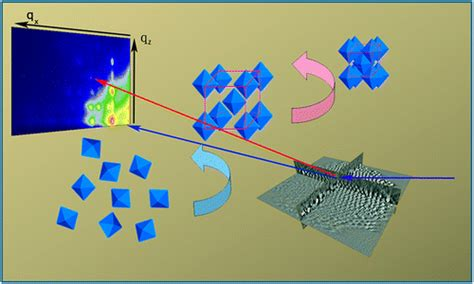
Each particle tries to maintain its maximum entropy/degrees of freedom. But when there is sufficient pressure (amount of particles) in a volume (the fucking can they’re in you twat) sometimes they form clumps. But wouldn’t the guys in clumps have less freedom to move than their free floating counterparts? When one of these clumps would disappear, another would appear elsewhere in the volume. The strange Kirkwood-Alder phenomenon. Which occurs for hard spheres, and rod shaped particles, and more complex molecules, and why not carry the phenomenon all the way up to suns, galaxies, universes. When one extinguishes, another like one appears to make up the entropic equilibrium. Then it struck me, in coherence with my thinking of the course of the universe to produce life.
I have long thought that we, living beings, are inherently more entropic than non-living matter. Do I not change more than a rock? Do the arrangement of my two legs offer more degrees of freedom than equal parts mass of carbon, nitrogen, oxygen, etc, that make them up? And should life here on Earth, be wiped away by the secret Iranian/Israeli nuclear exchange surely imminent, our souls wink out here, only to be recombined elsewhere. Life as a way for the universe to maximize entropy, and a melancholy thought in face of annihilation.
Or probably not.
 Starboys.Net
Leave a comment